What NEP 2020 Really Expects from ICT and AI Education
Understand what NEP 2020 really expects from ICT and AI education in schools — from digital equity and blended learning to ethics and teacher support.
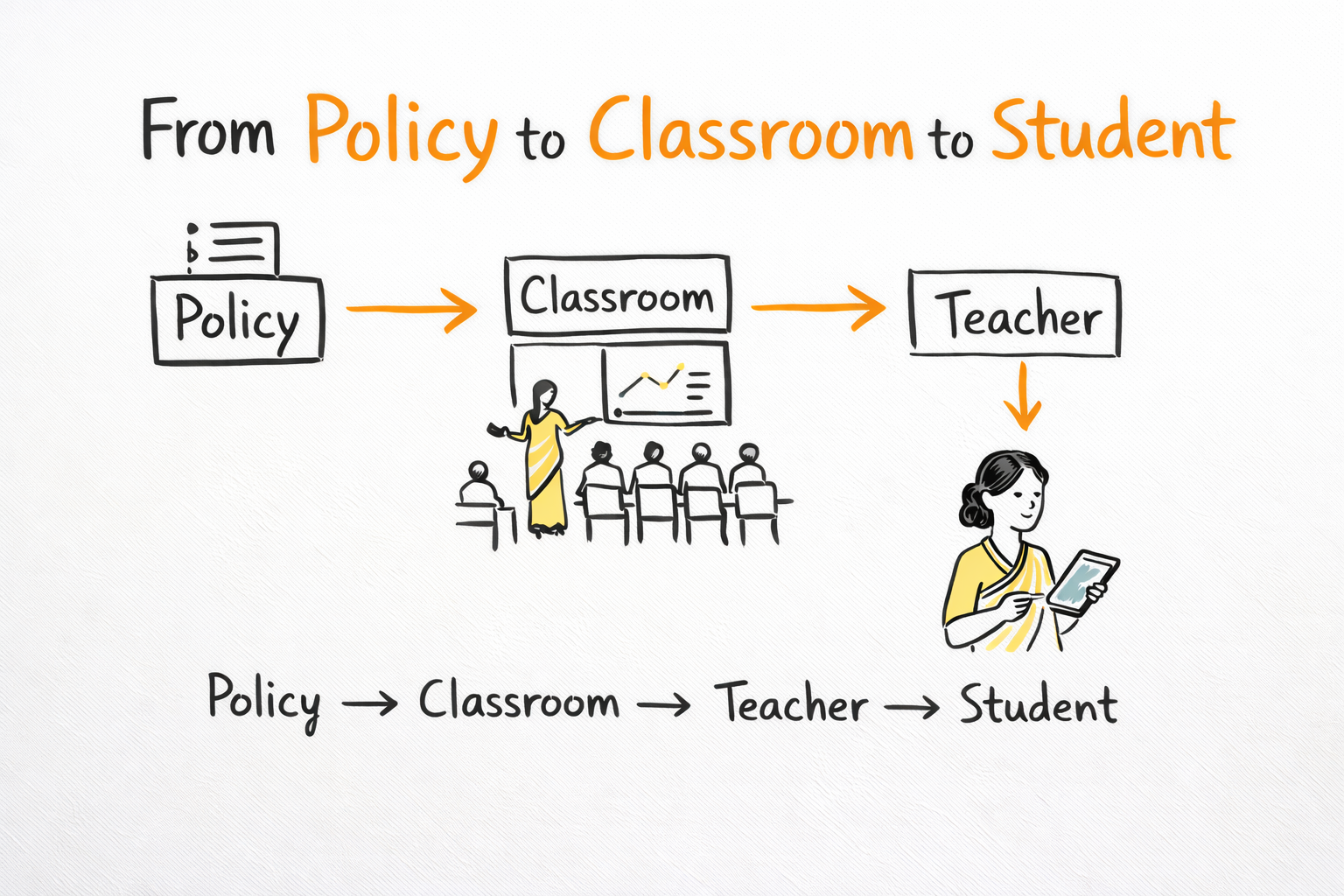
NEP 2020 ICT and AI education: what is actually expected?
NEP 2020 places strong emphasis on ICT and AI in schools, but not as standalone subjects or extra programs. The policy views technology as an enabler of better learning, better teaching, and greater access.
In practice, this means that ICT and AI are expected to support how students think, solve problems, and learn, not just the tools they use.
Many schools interpret NEP 2020 as a push to install computer labs or introduce coding classes. While infrastructure matters, the policy’s expectation goes deeper. It focuses on pedagogy, equity, teacher capability, and long-term learning outcomes.
Understanding this difference helps schools align their ICT and AI efforts more meaningfully.
Why this matters now
NEP 2020 arrives at a time when digital tools are widely available but unevenly used in classrooms. Some schools adopt technology quickly, while others struggle with access, training, or continuity.
The policy acknowledges this reality. It does not assume all schools have the same resources. Instead, it encourages gradual, context-aware integration of technology that supports learning goals.
A common misconception is that NEP 2020 demands rapid digitisation. In reality, it promotes thoughtful integration where technology strengthens conceptual understanding, collaboration, and inquiry-based learning.
The emphasis is not on speed, but on alignment.
What NEP 2020 expects from ICT in schools
1. Meaningful integration, not separate periods
ICT is not meant to remain limited to computer periods. NEP 2020 encourages the use of digital tools within subjects — for example, simulations in science, digital storytelling in languages, or collaborative projects.
Technology should support learning objectives, not distract from them.
2. Digital equity
The policy repeatedly highlights access. Infrastructure, such as internet connectivity, devices, and digital platforms, is seen as essential to reducing learning gaps between regions and school types.
Digital inclusion is a policy priority, not an optional goal.
3. Multilingual and accessible content
Platforms are expected to support regional languages and learners with disabilities. Technology is viewed as a bridge for accessibility.
4. Blended learning models
NEP 2020 supports a mix of in-person and digital learning. Flipped classrooms and collaborative digital work are part of this direction.
The idea is not to replace classrooms, but to extend them.
What NEP 2020 expects from AI education
1. Computational thinking and AI exposure from early grades
AI and computational thinking are expected to gradually enter school education, building logical reasoning and problem-solving skills.
The goal is familiarity and thinking skills, not technical specialisation.
2. Personalised learning support
AI is positioned as a support system that can adapt to the student’s pace and strengths. This aligns with NEP’s focus on competency-based learning.
3. AI as a teacher support tool
AI can help with administrative tasks, feedback, and performance insights. The policy sees this as a way to free teacher time for mentoring and deeper engagement.
Importantly, AI is described as a support, not a replacement.
4. Ethics, safety, and responsibility
Students are expected to understand data privacy, digital safety, and ethical use of technology. Responsible use is part of AI literacy.
Key pedagogical shifts enabled by technology
NEP 2020 links ICT and AI to broader educational reform:
- Moving from memorisation to competency-based learning
- Continuous assessment instead of high-pressure exams
- Holistic progress tracking
- Virtual labs for experiential learning
Technology supports these shifts but does not drive them alone.
Practical implications for schools
For schools, NEP alignment is less about purchasing tools and more about planning:
- Technology programs need continuity across grades
- Teacher confidence matters as much as infrastructure
- Digital initiatives require curriculum integration
- Ethics and safety need explicit attention
- Gradual adoption often works better than sudden upgrades
Schools that treat ICT and AI as isolated projects often struggle to sustain them. The policy’s direction suggests system-level thinking instead.
Where Codju fits
At Codju, this understanding of policy shapes how learning systems are designed. The focus remains on curriculum continuity, teacher enablement, and real classroom contexts.
Technology is treated as infrastructure for learning, not as a trend.
Looking ahead
NEP 2020 does not ask schools to digitise everything. It asks them to strengthen students’ thinking, learning, and growth in a digital world.
ICT and AI are part of that journey — but only when they are aligned with pedagogy, access, and long-term educational goals.
The real expectation is thoughtful integration.
FAQs
Does NEP 2020 make AI a compulsory subject?
No. The policy encourages exposure to AI and computational thinking but does not mandate AI as a standalone compulsory subject.
Will AI replace teachers under NEP 2020?
No. NEP 2020 clearly positions AI as a support tool. Teachers remain central to learning.
Is installing an AI lab enough for NEP alignment?
Infrastructure helps, but alignment requires curriculum integration, teacher readiness, and continuity.
Does every school need advanced technology to follow NEP 2020?
No. The policy allows gradual, context-based adoption. Even unplugged computational thinking activities are valid.
Continue the conversation
For schools exploring how NEP 2020 expectations translate into real classrooms, it helps to examine how AI and ICT are already being implemented in Indian schools.
You may find this related article useful:
➡️ How AI Is Actually Being Taught in Indian Schools Today
More perspectives and updates on AI, ICT, and school learning systems are available at:
🌐 Codju Website
You can also follow Codju’s ongoing work and discussions here:
- LinkedIn: https://www.linkedin.com/company/codjutech/
- Instagram: https://www.instagram.com/codjutech/
- YouTube: https://www.youtube.com/@codjutech/videos
Education systems evolve over time.
Staying informed helps schools make thoughtful, long-term decisions.