Why AI Should Be Introduced Early in School Education
Artificial Intelligence is often seen as an advanced subject, but the foundations of AI can be introduced much earlier in school. This article explores why students should begin understanding AI systems early in their education.
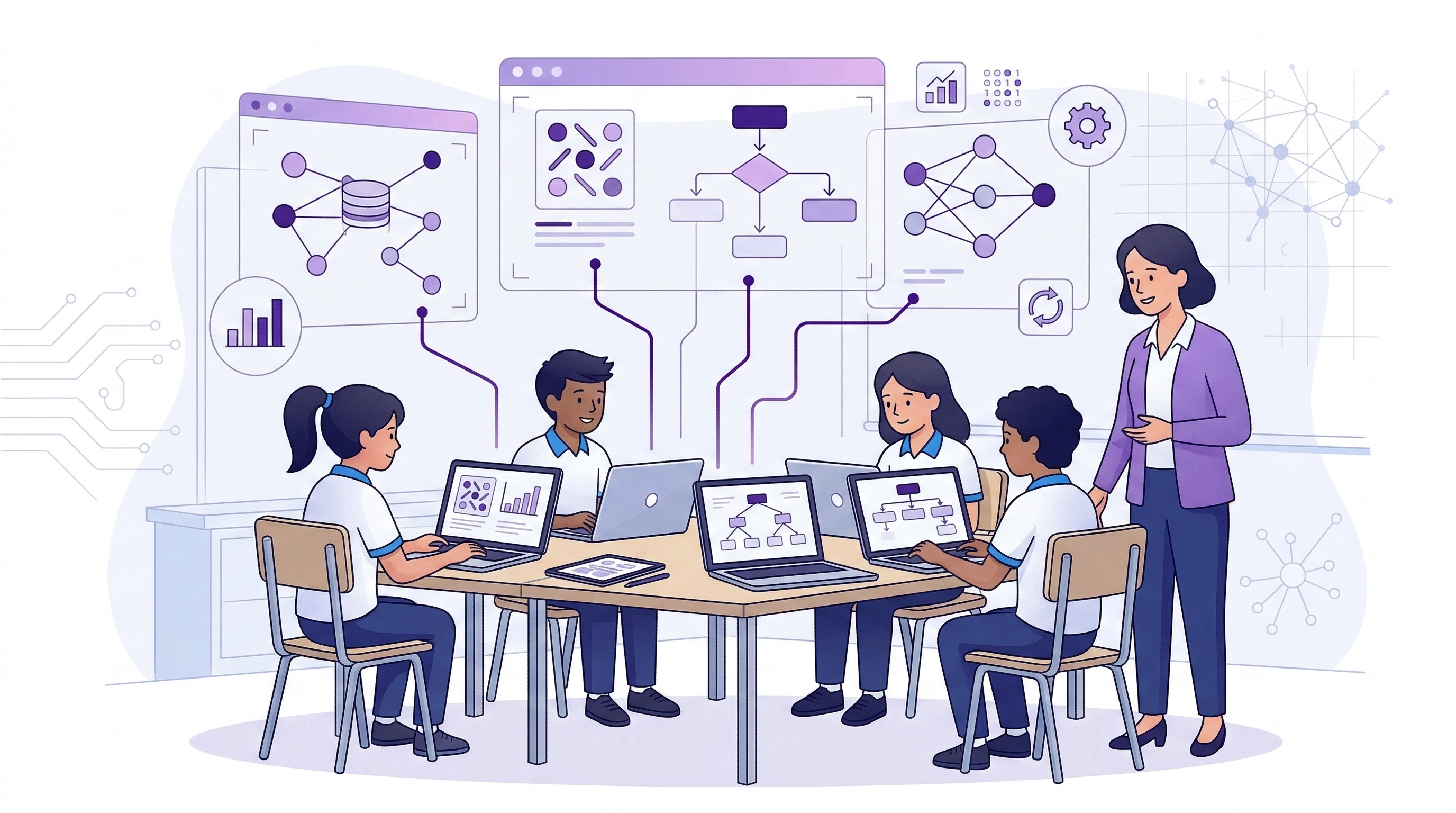
Artificial Intelligence often carries an aura of complexity.
When people hear the term, they imagine advanced mathematics, complex algorithms, and sophisticated research laboratories. Because of this perception, AI is frequently treated as a subject meant only for universities or specialised technical programs.
However, this view misunderstands what early AI education is actually about.
Introducing AI in schools does not mean teaching students how to build large machine learning models. Instead, it means helping them understand the digital systems that increasingly shape everyday life.
When approached correctly, AI education begins not with complexity but with understanding.
AI Is Already Part of Everyday Life
Students interact with artificial intelligence more often than they realise.
Recommendation systems suggest videos and music. Voice assistants respond to spoken commands. Navigation apps suggest the fastest route. Image filters recognise faces and objects.
These systems influence how people access information, make decisions, and interact with technology.
Yet most students use these systems without understanding how they work.
Early AI education helps students move from passive users to informed participants in a digital world.
Understanding Systems Before Complexity
One of the most important ideas in early AI education is that students do not need to understand advanced mathematics to begin learning about AI.
Instead, they can begin by understanding systems.
Every AI system relies on a few fundamental ideas:
datapatternsdecision rulesfeedback
For example, students can explore simple questions such as:
How does a recommendation system decide what video to suggest next? Why do some image recognition systems make mistakes? What happens when a system learns from biased data?
These questions encourage students to think about how digital systems process information.
The goal is not technical mastery.
The goal is system awareness.
AI Literacy Is Becoming Essential
Just as earlier generations needed to learn how to read, write, and use computers, the current generation must learn how intelligent systems operate.
AI literacy involves understanding:
What AI can doWhat AI cannot doHow AI systems learn from dataHow AI decisions can influence outcomes
Without this understanding, students may interact with powerful technologies without questioning their limitations or implications.
Early education builds the foundation for responsible technology use.
Developing Computational Thinking
Introducing AI concepts also strengthens computational thinking.
Students learn how to:
recognise patterns, break problems into stepsdesign logical processestest and refine solutions
These abilities are valuable far beyond technology subjects.
They support learning in mathematics, science, economics, and even social sciences.
AI becomes a context through which students develop structured ways of thinking.
Encouraging Critical Thinking About Technology
Another benefit of early AI education is that it encourages students to question technology rather than accept it blindly.
When students understand how AI systems work, they begin asking deeper questions.
Why might an AI system produce inaccurate results? What happens if training data contains bias? How should automated systems be used responsibly?
These discussions introduce ethical thinking alongside technical understanding.
Students learn that technology design involves human decisions and trade-offs.
Building Confidence Around Emerging Technology
Technology evolves quickly.
When students encounter unfamiliar systems without foundational understanding, they may feel intimidated by them.
Early exposure reduces this barrier.
Students become comfortable exploring new tools because they already understand the underlying ideas that guide digital systems.
Instead of seeing AI as mysterious or inaccessible, they recognise it as a system built from understandable components.
Confidence often grows from familiarity.
Preparing Students for a Changing World
Artificial intelligence is reshaping many professions.
Healthcare uses AI for diagnostics. Agriculture uses AI for crop monitoring. Finance uses AI for risk analysis. Manufacturing uses AI for automation and optimisation.
Most students will not become AI engineers.
However, many will work in fields where intelligent systems are part of everyday operations.
Understanding how these systems function allows them to interact with technology thoughtfully and effectively.
Age-Appropriate AI Education
Introducing AI early does not mean overwhelming students with technical detail.
Concepts can be introduced progressively.
Younger students can explore ideas such as pattern recognition and decision rules through simple activities and visual tools.
Older students can gradually explore topics such as algorithms, data analysis, and machine learning concepts.
The key is to design lessons that align with students’ cognitive development while providing a continuous pathway of understanding.
The Role of Schools
Schools play an important role in shaping how students understand emerging technologies.
If AI education begins only at advanced stages, many students will encounter intelligent systems without the opportunity to understand them.
Introducing AI earlier in the curriculum ensures that foundational understanding develops gradually alongside other academic skills.
The focus should not be on producing specialists.
It should be on building technological awareness.
From Technology Use to Technology Understanding
For many years, computer education focused primarily on teaching students how to use software tools.
Today, that approach is no longer sufficient.
Students must understand the systems behind the tools they use.
Artificial intelligence represents one of the most influential technological developments of our time.
Helping students understand it early allows them to engage with the digital world more thoughtfully.
When education moves from simple tool usage toward system understanding, students become more capable participants in the technologies shaping their future.
FAQs
Why should AI be introduced early in school education?
Early introduction helps students understand the systems behind modern technology and prepares them to interact thoughtfully with AI-driven tools.
Do young students need to learn complex AI mathematics?
No. Early AI education focuses on simple ideas such as data, patterns, and decision-making systems rather than advanced technical concepts.
What skills does early AI education develop?
It helps students build computational thinking, logical reasoning, critical thinking, and digital literacy.
Is AI education only useful for students pursuing technology careers?
No. AI is influencing many industries, so understanding how intelligent systems work is valuable across professions.
How can schools introduce AI concepts effectively?
Schools can introduce age-appropriate activities that explain how digital systems learn from data, recognise patterns, and make decisions.
Call to Action
Helping students understand AI systems early prepares them for a world where intelligent technologies shape everyday decisions.
At Codju, the Accel AI curriculum introduces students to AI concepts through structured lessons and hands-on activities supported by the AI Labs 360 platform, ensuring that understanding develops progressively across grades.
To explore how schools are implementing AI education within regular classroom schedules, visit: