In this article
- 01 The Real Shift: From Memorisation to Thinking
- 02 Why This Matters More Than It Seems
- 03 What Exactly Has Changed in the Curriculum
- 04 1. Computational Thinking Starts Early (Classes 3–5)
- 05 2. AI and Structured Thinking Begin (Classes 6–8)
- 06 3. Competency-Based Learning Becomes the Standard
- 07 The Biggest Challenge: Schools Are Not Ready Yet
- 08 What Schools Must Do in 2026 (Action Plan)
- 09 1. Integrate CT Across Subjects (Not as a Separate Period)
- 10 2. Invest in Teacher Training (Non-Negotiable)
- 11 3. Move to Activity-Based Classrooms
- 12 4. Redesign Assessment Systems
- 13 5. Use Digital and Structured Resources
- 14 6. Build Parent Awareness
- 15 The Implementation Gap: Where Most Schools Will Fail
- 16 Where Codju Fits In
- 17 What Schools Should Do Next
- 18 Final Thought: This Is a Directional Shift, Not a Trend
Indian classrooms are entering one of the biggest shifts in decades. The Central Board of Secondary Education has introduced Computational Thinking (CT) and Artificial Intelligence (AI) into the core learning experience for students from Classes 3 to 8.
This is not just another syllabus update. It is a structural change in how students are expected to think, learn, and solve problems. For schools, the message is clear: this is not future planning. It is immediate execution.
The Real Shift: From Memorisation to Thinking
For years, Indian education has been criticised for rewarding memorisation over understanding. The new curriculum aims to reverse that.
"What is the answer?"
- "How did you arrive at the answer?"
- "What steps did you follow?"
- "Can this logic be applied elsewhere?"
This shift is aligned with the broader vision of NEP 2020 and NCF 2023, focusing on real-world problem solving rather than textbook recall.
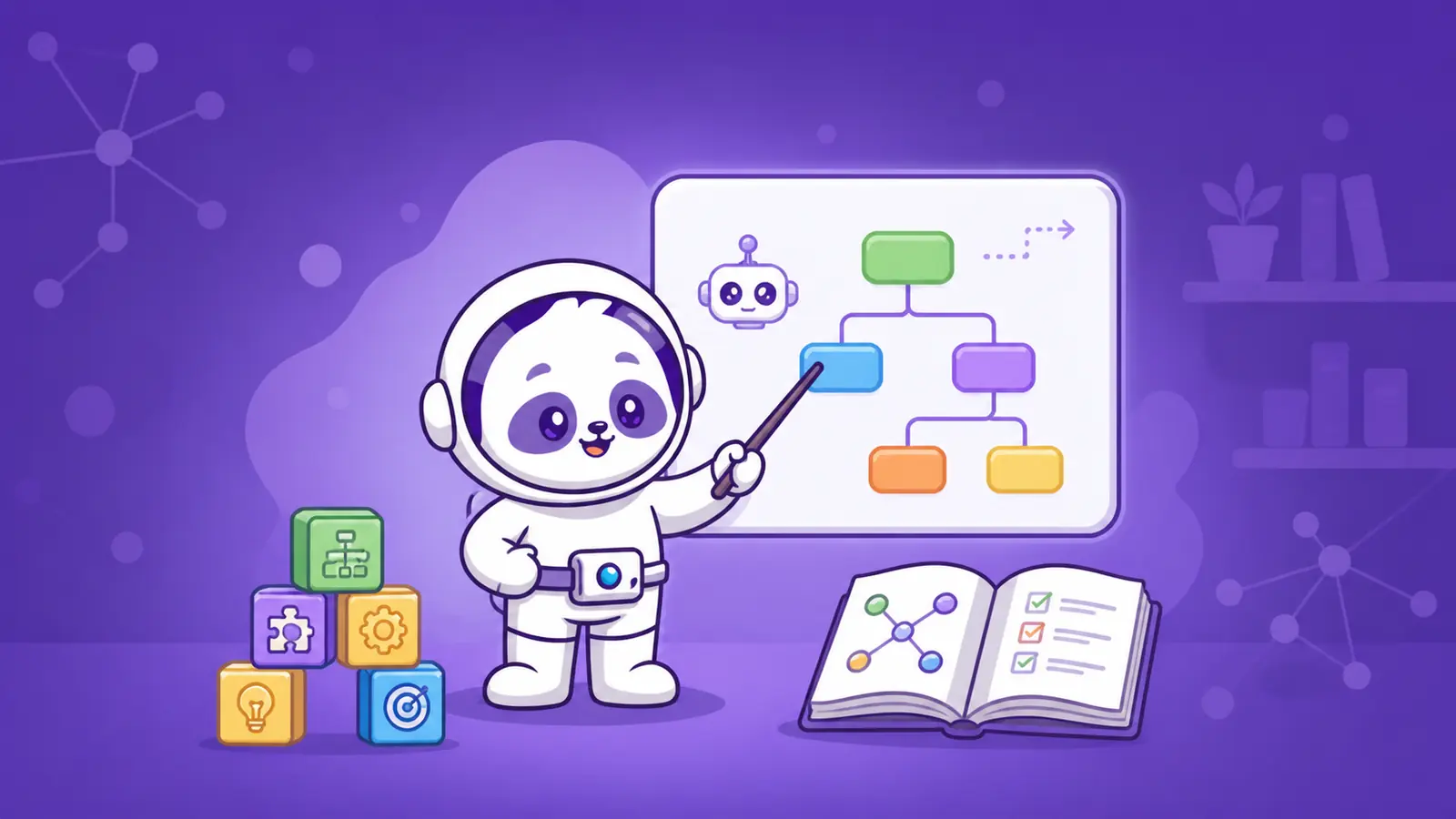
At its core, computational thinking introduces four foundational skills:
Breaking large problems into smaller, manageable pieces
Identifying similarities and trends across problems
Focusing on essential information, ignoring the irrelevant
Designing step-by-step solutions to problems
These are the same skills that power modern AI systems. Teaching CT is teaching the foundation of AI.
Why This Matters More Than It Seems
Most schools are still underestimating this change. This is not about teaching coding early. It is about changing how every subject is taught.
CBSE has made it clear:
| CBSE Mandate | What It Means for Schools |
|---|---|
| CT is not a standalone subject in early grades | Must be woven into Math, EVS, and Language teaching |
| AI is not just an optional add-on | AI literacy becomes a measurable learning outcome |
| Logical thinking is a measurable outcome | Assessment must evolve beyond pen-and-paper tests |
What Exactly Has Changed in the Curriculum
1. Computational Thinking Starts Early (Classes 3–5)
At the Preparatory Stage:
- CT is embedded into Math, EVS, and Languages
- Learning is activity-based, not lecture-based
- Logical sequencing through games and storytelling
- Pattern recognition and problem-solving
Students are not learning coding. They are learning how to think step-by-step.
2. AI and Structured Thinking Begin (Classes 6–8)
From the Middle Stage:
Basic AI concepts introduced through project-based learning
CT applied across Science, Math, and Social Studies
Understanding ethical use of technology and responsible AI
This builds AI literacy before AI skills — which is the correct sequence.
3. Competency-Based Learning Becomes the Standard
The biggest transformation is in assessment.
- Memory and repetition
- Predictable questions
- Uniform pen-and-paper tests
- Case-based questions
- Real-life problem solving
- Group projects & continuous evaluation
- 50% competency-based questions
This requires a complete redesign of how schools evaluate students.
The Biggest Challenge: Schools Are Not Ready Yet
On paper, the curriculum looks progressive. In reality, most schools are still operating with:
- Lecture-based teaching with static lesson plans
- Exam-focused learning with minimal teacher training
- No structured CT rollout plan
Many educators are asking: “Will teaching actually change — or will schools continue the same old methods?”
This concern is valid. Because curriculum change without classroom change fails.
What Schools Must Do in 2026 (Action Plan)
To successfully implement the new curriculum, schools must move beyond awareness into execution.
1. Integrate CT Across Subjects (Not as a Separate Period)
- Redesign lesson plans for Math, EVS, and Language with CT embedded
- Introduce puzzles, logical exercises, and scenario-based learning
- Treat CT as a teaching approach, not an extra subject
2. Invest in Teacher Training (Non-Negotiable)
Teachers are the biggest bottleneck.
- Nominate educators for CBSE workshops and DLDs
- Train teachers in activity-based learning and AI fundamentals
- Shift from "explaining concepts" → "guiding exploration"
Without this shift, implementation will fail.
3. Move to Activity-Based Classrooms
Classrooms must evolve from passive listening to active participation.
- Introduce group tasks and hands-on activities
- Design real-life problem solving exercises
- Students should be doing, not just listening
4. Redesign Assessment Systems
- Move beyond pen-and-paper tests
- Introduce observation journals and project-based evaluation
- Measure thinking, application, and problem-solving — not memorisation
5. Use Digital and Structured Resources
CBSE expects schools to leverage DIKSHA platform resources and standardised frameworks. However, most schools struggle with fragmented tools and lack of structured curriculum. This is where the gap becomes critical.
6. Build Parent Awareness
Parents still evaluate education based on marks, exams, and ranks. Schools must communicate why CT matters, why AI is introduced early, and why traditional learning is changing. Without parent alignment, adoption slows down.
The Implementation Gap: Where Most Schools Will Fail
| Challenge | Result |
|---|---|
| Lack of ready-to-use CT content | Partial implementation, superficial activities |
| Limited teacher readiness | No measurable learning outcomes |
| No structured rollout plan | Compliance on paper, not in practice |
| Time constraints and overloaded calendars | No real classroom impact |
The biggest issue is not understanding the curriculum. It is execution.
Where Codju Fits In
This is exactly the gap Codju is built to solve. Instead of schools figuring everything out from scratch, Codju provides:
Pre-structured, age-appropriate, curriculum-aligned CT lessons. No design needed from scratch.
200+ classroom-ready exercises aligned with CBSE expectations and NCF 2023.
Simplifies delivery, reduces preparation time, and guides classroom execution.
Practical, scalable, and designed specifically for Indian school contexts.
It removes the biggest friction: “How do we actually start?”
What Schools Should Do Next
If you are a school leader or educator, the next step is not more research. It is action.
- Understand the curriculum requirements — know what CBSE now expects for each class
- Evaluate your current readiness — audit teacher skills, lesson plans, and assessment design
- Implement a structured CT program — do not reinvent the wheel
Explore a ready implementation framework here: 👉 Explore Computational Thinking
Or experience how it works in practice: 👉 https://ct-preview.codju.com/
Final Thought: This Is a Directional Shift, Not a Trend
This curriculum is not a temporary experiment. It is a long-term shift toward thinking over memorisation, skills over syllabus, and application over theory.
- Build stronger learners
- Deliver better outcomes
- Stay ahead of the curve
- Struggle with implementation
- Fall behind in outcomes
- Eventually forced to catch up
The question is not whether this change will happen.
It already has.
The only question is: Will your school implement it properly in 2026, or wait until it becomes a problem?
FAQ
Frequently Asked Questions
What is Computational Thinking and why is CBSE introducing it?
Computational Thinking (CT) is a set of problem-solving skills — decomposition, pattern recognition, abstraction, and algorithmic thinking — that mirror the logic behind modern AI systems. CBSE is introducing CT from Classes 3 to 8 as part of its alignment with NEP 2020 and NCF 2023, shifting from rote memorisation toward structured, logical reasoning and real-world problem solving.
Is Computational Thinking the same as coding?
No. Computational Thinking is not about writing code. It is a way of thinking — breaking down problems, finding patterns, and designing step-by-step solutions. Coding is one application of CT, but CT itself is a transferable skill that applies across mathematics, science, languages, and other subjects.
Which classes are affected by CBSE's new CT and AI curriculum?
The new curriculum covers Classes 3 to 8. For Classes 3–5 (Preparatory Stage), CT is embedded into subjects like Math, EVS, and Language through activity-based learning. For Classes 6–8 (Middle Stage), students are introduced to basic AI concepts, project-based learning, and interdisciplinary CT applications.
What do schools need to do to implement the CBSE CT curriculum in 2026?
Schools must: (1) embed CT across subjects rather than treating it as a standalone period, (2) invest in teacher training through CBSE workshops and certified programs, (3) shift to activity-based classrooms, (4) redesign assessment toward competency-based evaluation, and (5) use structured resources like DIKSHA and purpose-built CT frameworks. Codju's CT curriculum provides a plug-and-play implementation layer for schools.
How does Codju support CBSE's Computational Thinking curriculum?
Codju provides a structured CT curriculum with 200+ ready-to-use activities, all aligned with CBSE's expectations and the NCF 2023 framework. The system is teacher-friendly, activity-first, and designed for real Indian classrooms — removing the biggest barrier for schools: knowing how to actually start.
Is the new CBSE CT curriculum mandatory for all schools?
Yes. CBSE has made Computational Thinking and AI a core part of the curriculum for Classes 3 to 8. It is not an optional add-on. Schools are expected to integrate CT into everyday teaching and move toward competency-based assessment, with 50% of questions targeting applied reasoning rather than memorisation.
Continue Reading
All Computational Thinking articles →
How Schools Can Teach AI Without Teaching Programming
Learn how schools can teach AI without programming through Computational Thinking, data, patterns, logic, ethics and no-code activities for primary and middle school students.

CBSE Computational Thinking Classes 3–8: What Students Learn at Each Stage
Understand the CBSE Computational Thinking and AI curriculum for Classes 3–8 in 2026–27, including class-wise CT skills, AI concepts, activities, projects, assessment and learning outcomes.
What Is Computational Thinking? Complete Guide for Students & Schools
What is Computational Thinking? Learn the four pillars, real-world examples, CT vs coding, classroom activities, AI connections, and how schools can teach computational thinking.
Screen-Free Learning: How to Teach Computational Thinking Without Computers
Computational thinking starts with how students think, not computers. Learn 5 unplugged activities to build foundational logic.
Codju for Schools